You’re helping a customer when the phone rings. By the time you’re free to call back, the caller may have already booked somewhere else. The same thing can happen after hours, over lunch, or while your team is out on a job.
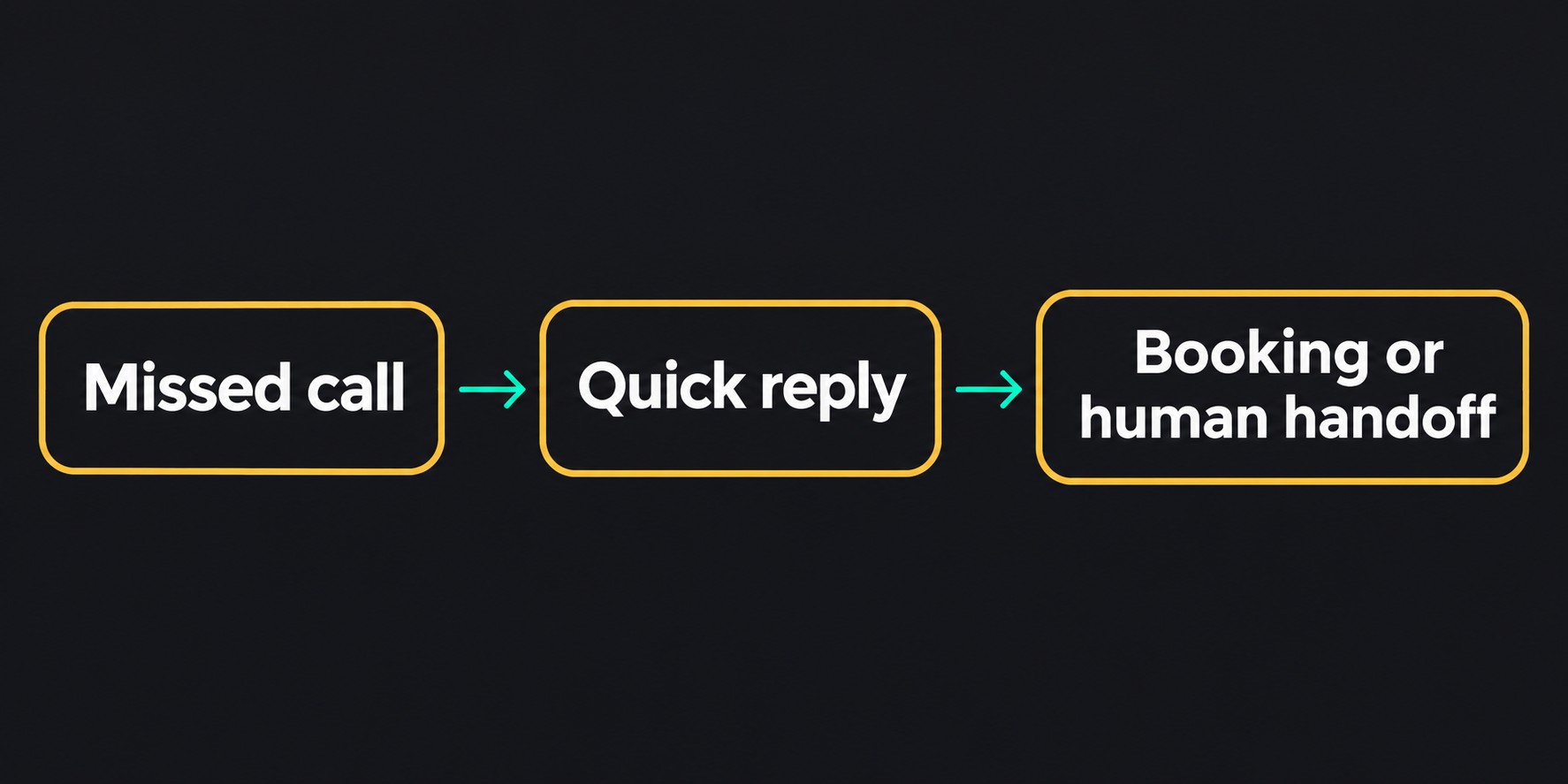
Start by deciding what should happen when nobody picks up. A missed-call text can keep the conversation open. An AI receptionist for small business can collect details and offer appointments when the rules are clear. Some calls need a person. Here’s how to set up all three paths and test them yourself.

Choose what happens when nobody answers
- Send a text back. If a call goes unanswered, send a short message from your business number that gives the caller a clear next step. Example: “Thanks for calling. We’re helping another customer right now. Reply with what you need and a good time to reach you.”
- Offer a booking. Let an AI receptionist answer common questions and offer real availability for services you’ve approved. If a request falls outside those rules, have it take a message or connect the caller with someone who can help.
- Route the call to a person. Give callers a clear way to reach your team for urgent issues, complaints, or anything that needs judgment. If nobody is available, say when they can expect a response.
Run a five-minute missed-call audit
- Call from an unfamiliar number. Try during a busy period and again after closing. Note how long it takes to get a useful response.
- Ask for something routine. Try booking an estimate, a consultation, or a service your business offers. Check that the time offered matches your real calendar.
- Ask for something outside the rules. Request a service you don’t offer or ask to speak with a person. Listen for a clear handoff or callback expectation.
- Check what your team receives. Can someone see who called, what they need, and what the caller was promised? If a slot was booked, confirm it appears on the calendar.
- Fix the first dead end. Start with the moment the caller gets stuck. That may be an unclear voicemail greeting, a text with no reply path, or a calendar that isn’t kept up to date.
What a booking call can sound like
Caller: Hi, do you have any time for a consultation this week?
Receptionist: I can check. Is this your first consultation, and would mornings or afternoons work better?
Caller: First time. Afternoon, please.
Receptionist: I can offer Thursday at 2:30 or Friday at 4. Which works for you?
This is an illustrative script. A salon could use the same pattern to book a standard service, an auto shop could collect vehicle details before offering a diagnostic appointment, and a professional office could schedule an introductory call. Give the receptionist the information it needs to take the next step, including when to stop and hand off.
Start with the hours you’re missing
Try the workflow after hours or when your main line is busy. Track missed calls, booked appointments, and handoffs each week. Review a few calls with your team so you can spot unclear answers and adjust your booking rules.
Hear Kifaru Hi-Tech’s live AI receptionist demo and try the same questions from your audit.